Barcelona Tremp Square
┅►
#B24-01

Barcelona Tremp Square

Re-Use

Osman Can Bagatır
Ece Kandemir

Visualization:
Halil İbrahim Zeytinci

Date
2024
Type Housing
Location Barcelona
Parcel Square 450 m2
Total Construction Square 1600 m2
Status Concept
Client International Union of Architects (uia)
Introduction

When considering a neighborhood square and residential facade in Barcelona, ​​we believe it's essential to understand the "goodness" inherent in the Mediterranean. In our view, Mediterranean homes are not merely places to live, but spaces where light and connection to nature are possible. Trees and vines offer shade, incorporating nature into the space and the individual, creating a unique sense of well-being. This orientation, while shaping housing and life, also defines the founding principles of Mediterranean cities. Starting with Mediterranean housing, we can confidently say that legible urban fabrics are also composed of elements of these fundamental orientations. Therefore, we believe that the urban disconnections, which are also the subject of this competition, can be addressed by remembering the Mediterranean principles of existence in spaces and applying them to the principles that were correctly applied in the past.

1. ABOUT THE SITE

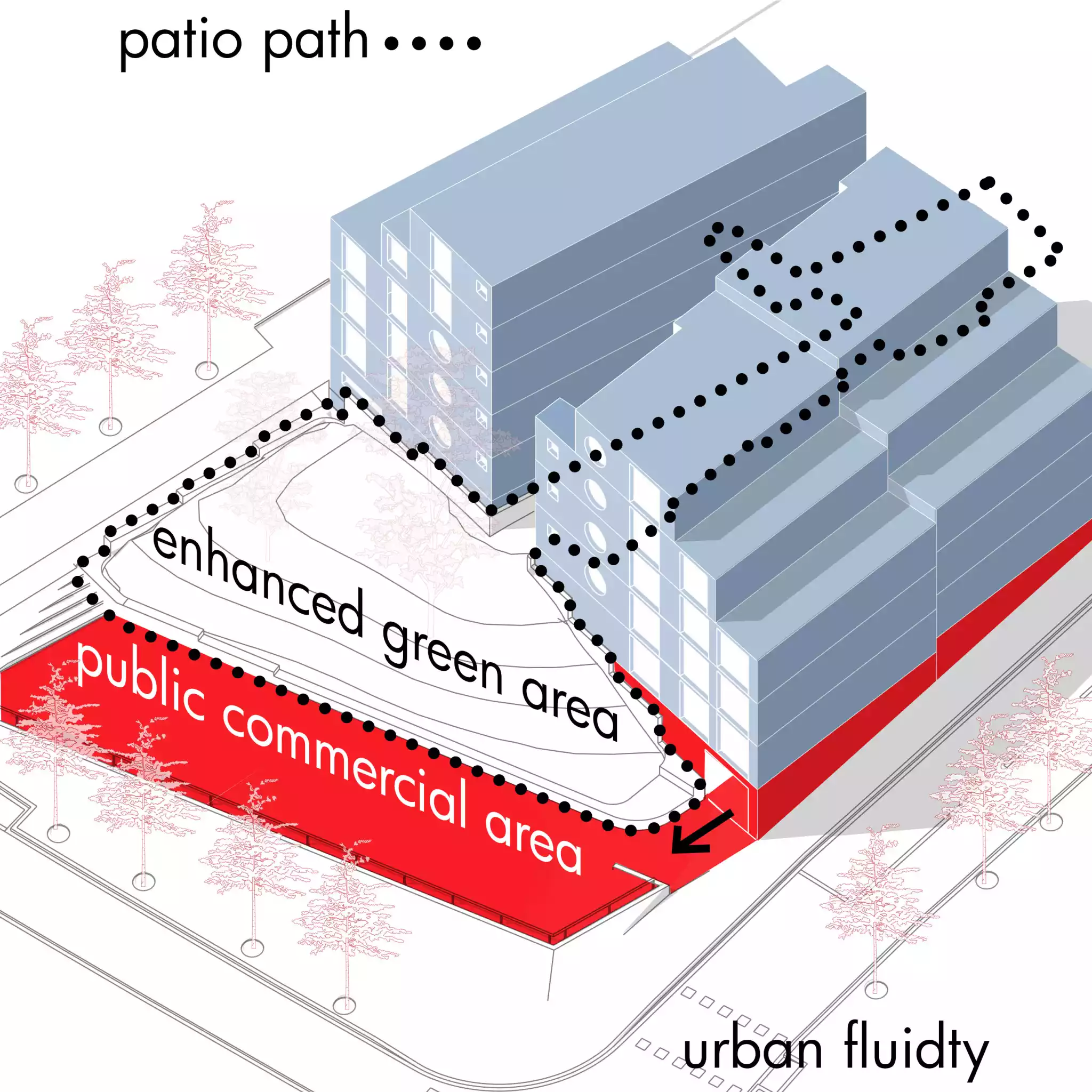
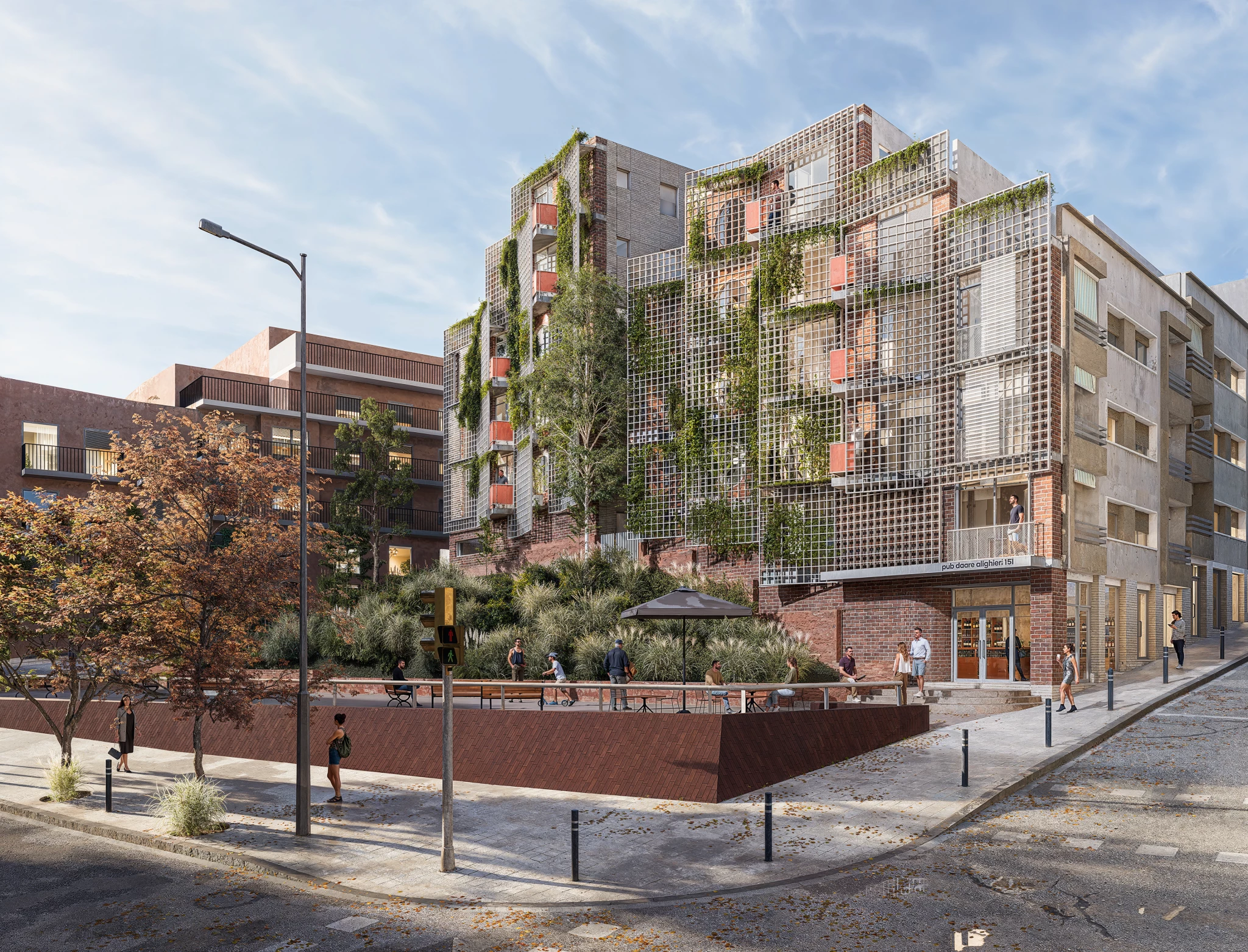
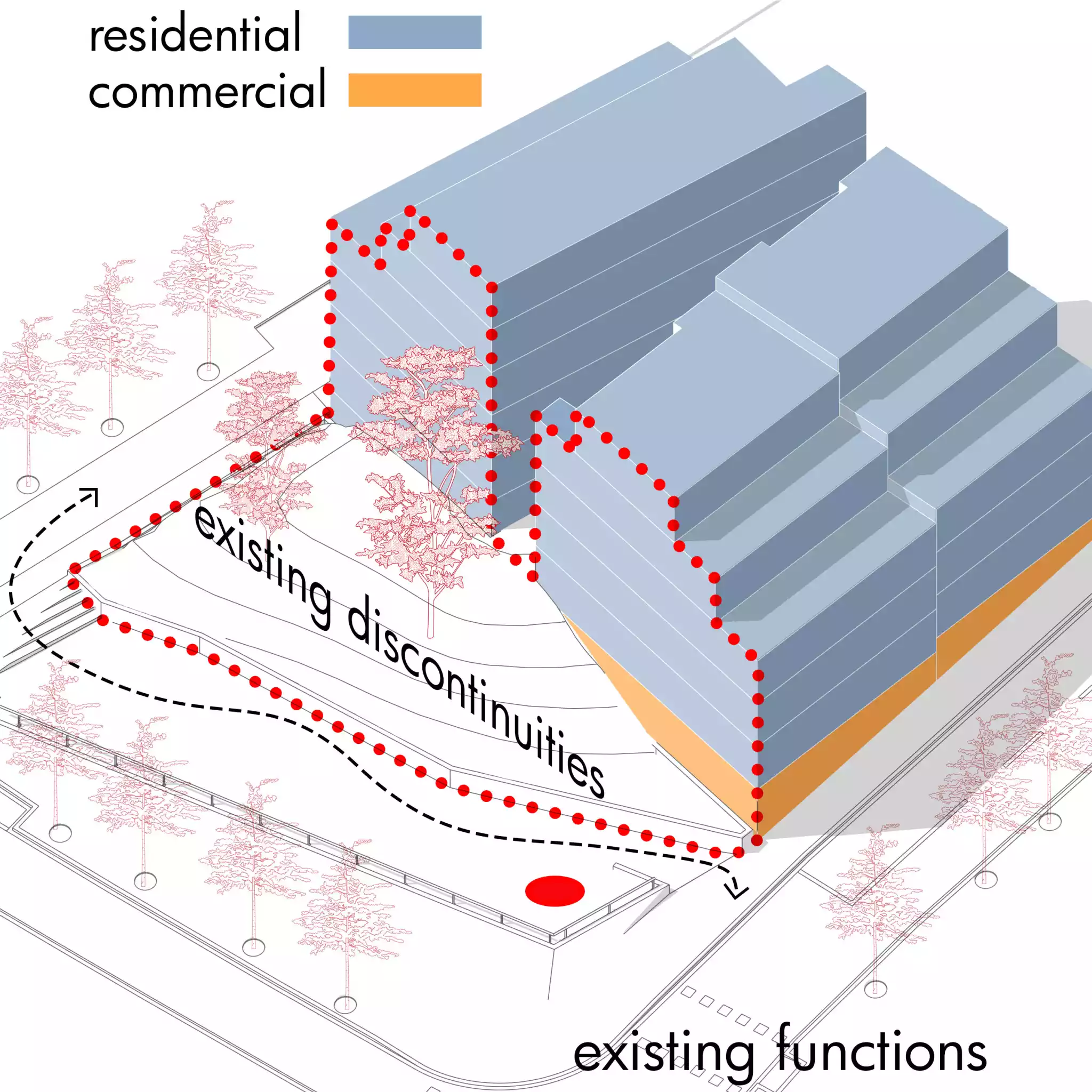
The project area is located in the El Carmel neighborhood of Barcelona, ​​known for its dense residential buildings and steep slopes constructed during the migration period. The scarcity of social and public spaces has made the open space in front of the project area a well-known point for the residents. One of the key elements defining the character of this open space is its extensive landscaped area and cypress trees. Preserving this natural oasis, which has spontaneously formed amidst dense construction, is one of our fundamental priorities.

2. DESIGN DECISIONS

Rehabilitation of the existing green oasis: Considering the patio, which is also a mandatory aspect of the specifications, we have made a series of decisions to rehabilitate the aforementioned green area together, ensuring the healthy development of the landscape in this region while preventing damage to the structures. These are:

1. We improved the insulation by excavating the existing reinforced concrete boundary element between the building and the landscape down to the foundation level of the buildings.

2. We designed a detail on this boundary element using compacted soil material made from recycled materials, which will slowly absorb water and deliver it to the ground.

3. We proposed a drainage line along the patio area.

4. We proposed water tanks and an irrigation system for rainwater harvesting.

Renders

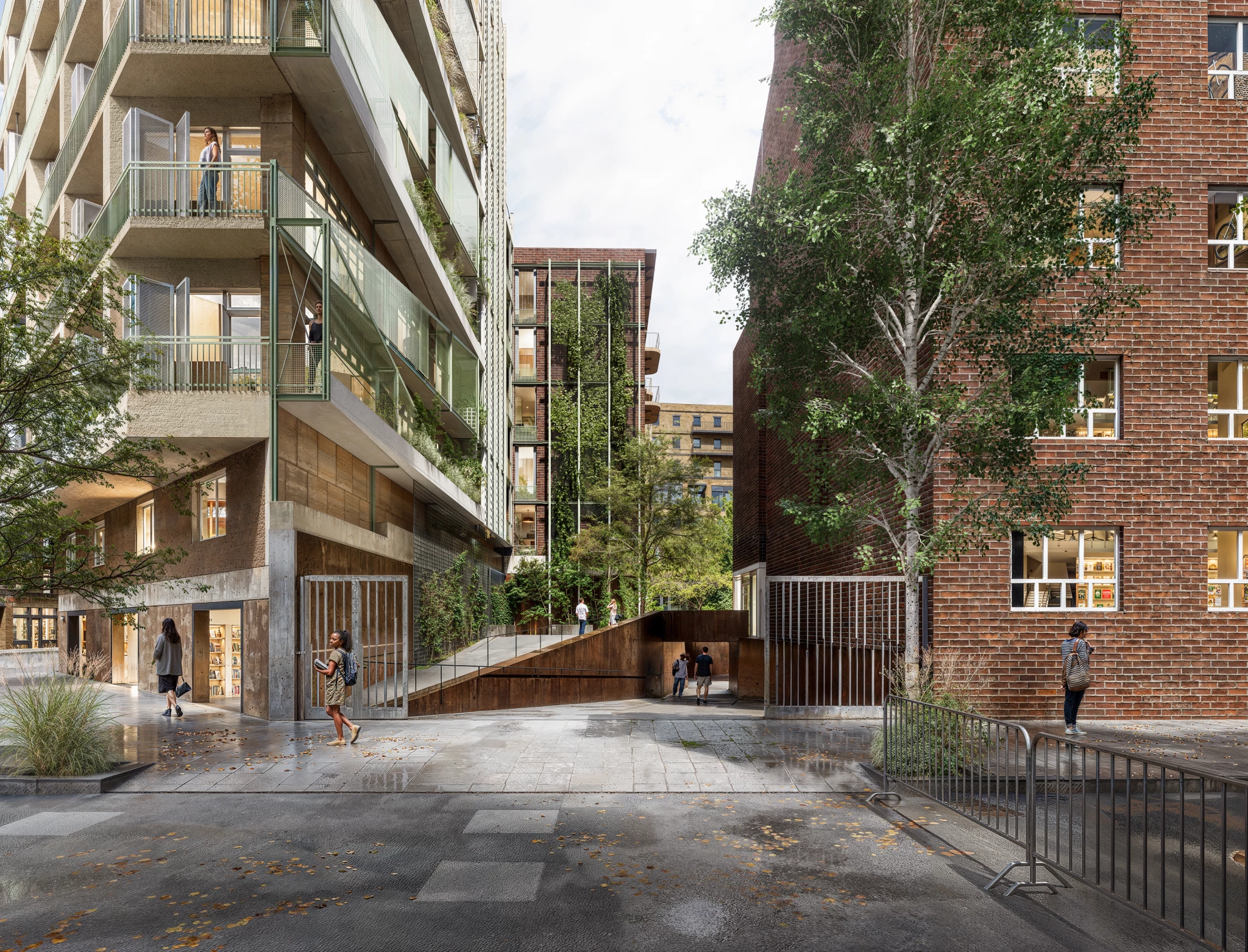
Carrer d'Ausias Marc Yaklaşımı

The Facade

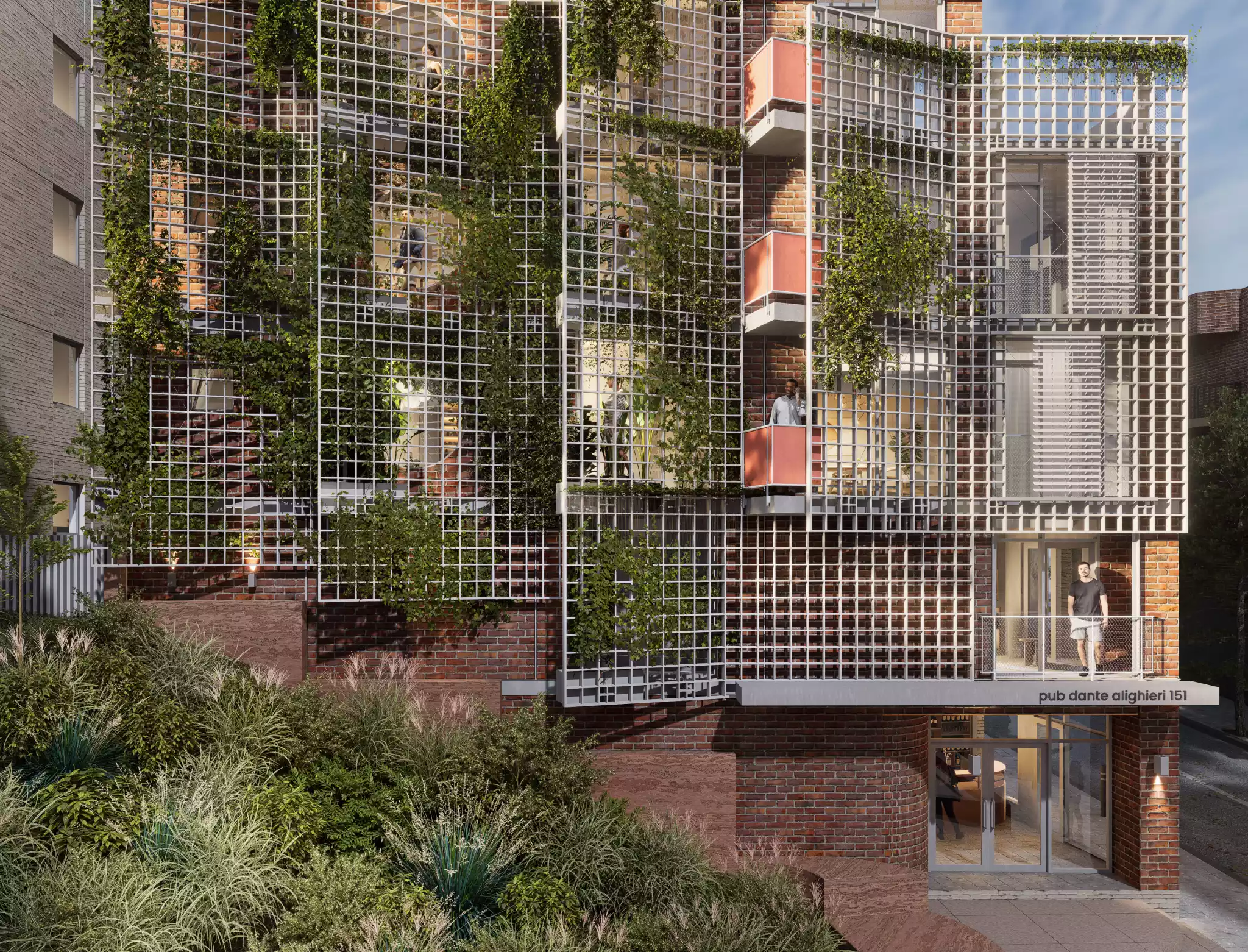
The existing structures have two-layered brick walls on their blind walls. Our proposal was to preserve the sound bricks on the interior by cleaning and reusing them, while removing the bricks from the exterior facade and recovering them as compacted earth through a recycling strategy.
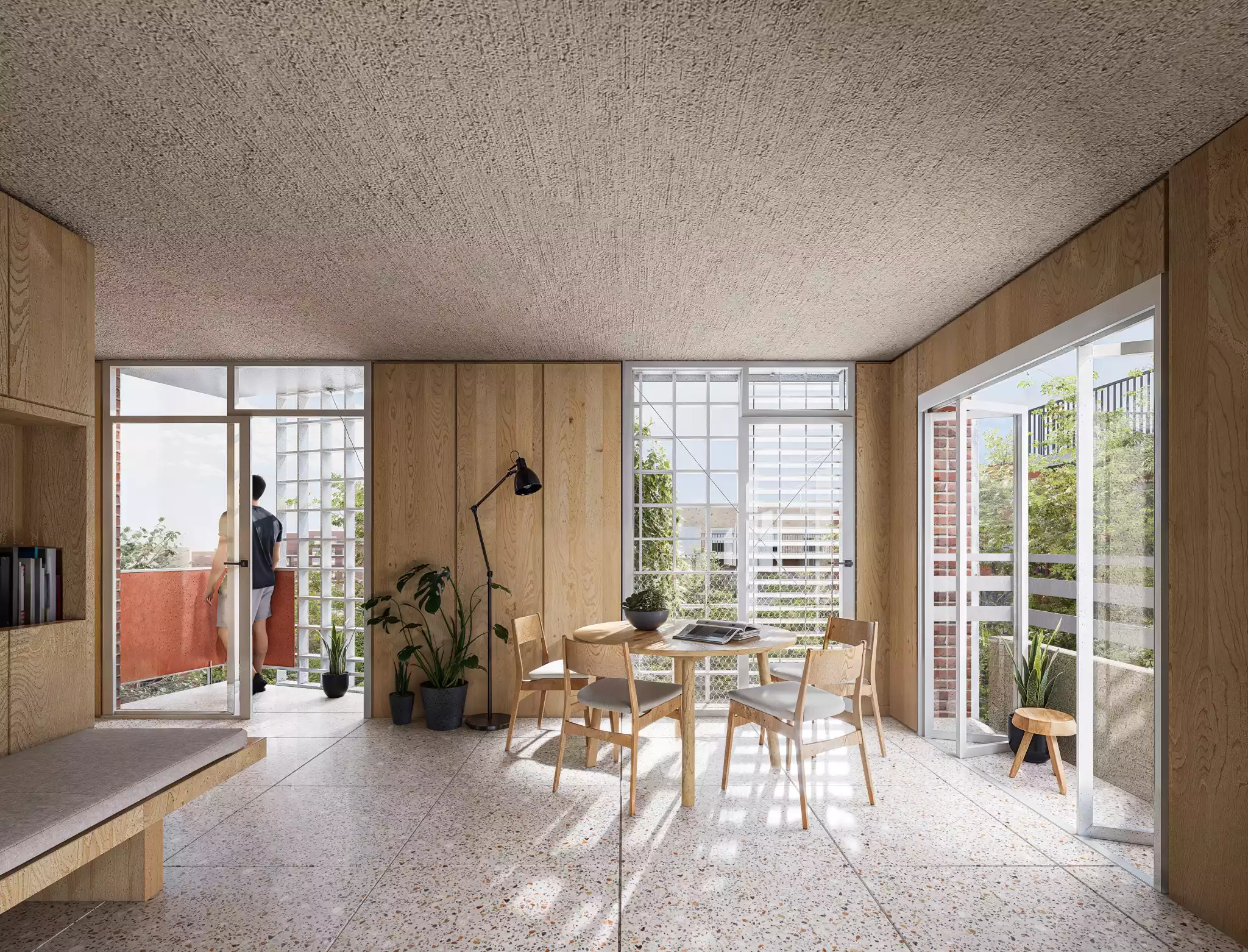
As an opening strategy, the areas located on the existing blind facade are the dining room, entrance, and toilets. We aimed for spatial diversity by changing the opening strategies in different spaces according to their functional diversity. We proposed fixed-frame circular openings at the entrance, full-length sliding doors in the dining areas, and casement ventilation windows in the toilets.
Orientation

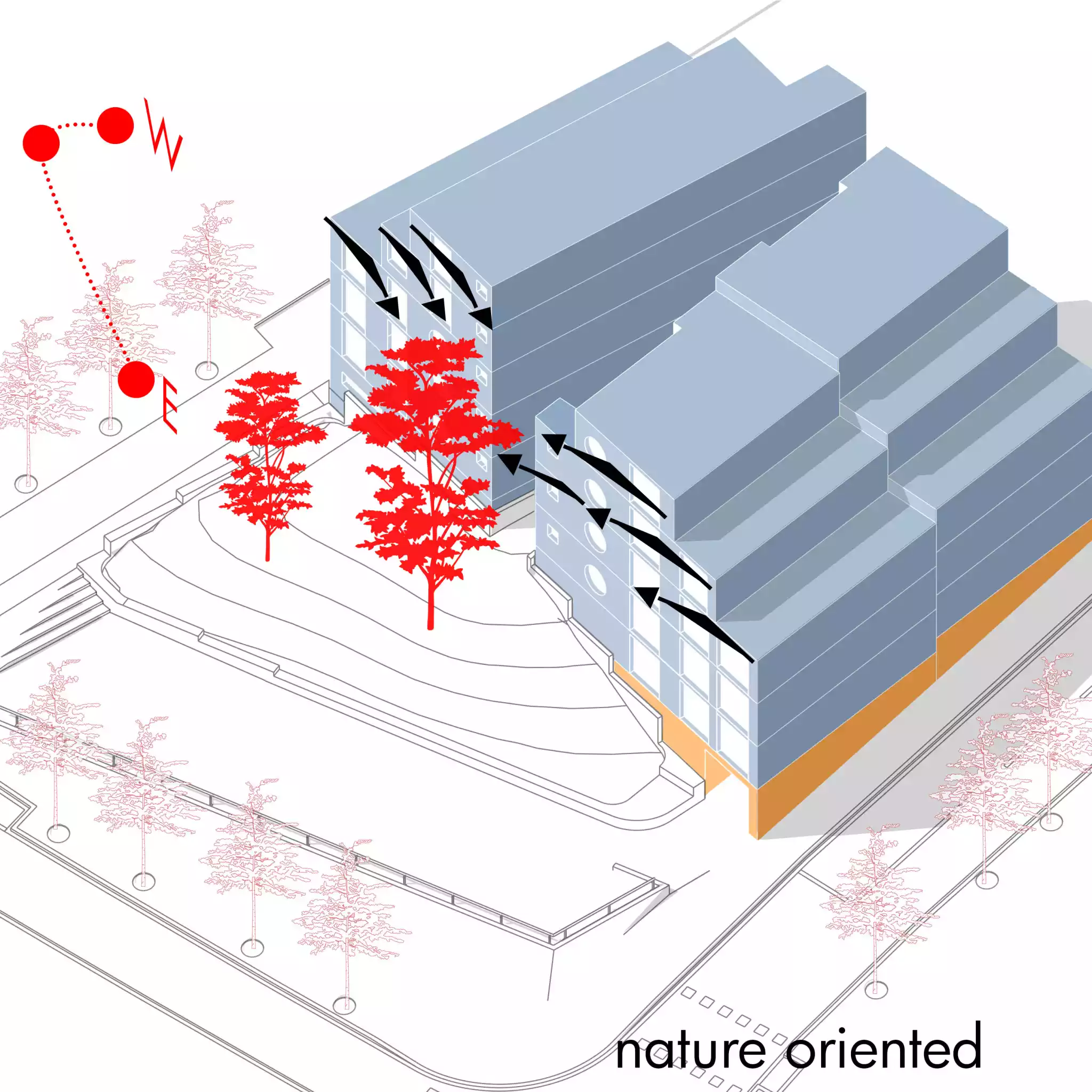
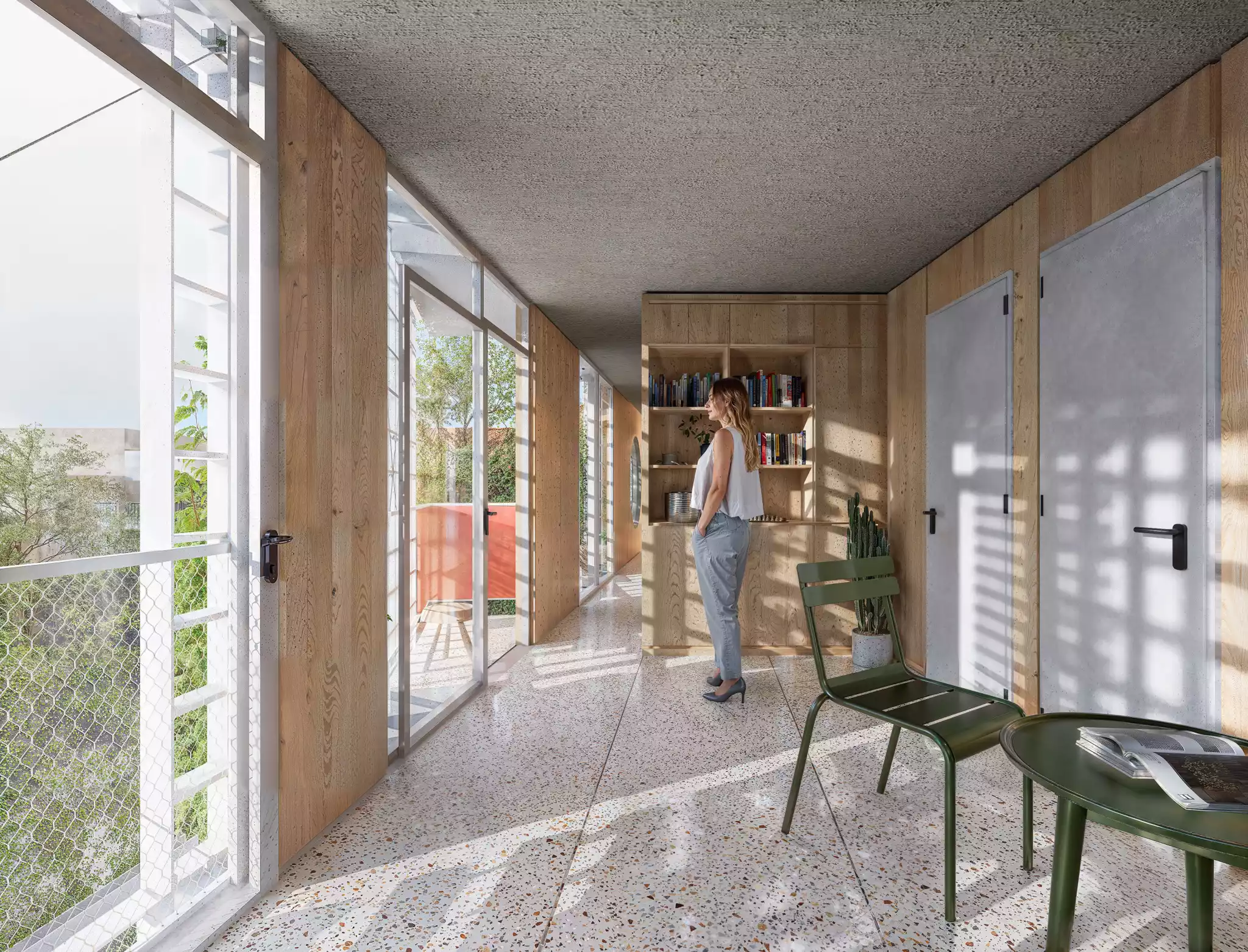
As we stated at the beginning, considering that the element that complements the Mediterranean space can only exist through light and nature, we designed a structure that extends along the proposed openings towards the rehabilitated green area and the existing cypress tree. With this structure, we aimed to provide controlled lighting of the space while increasing spatial diversity with planters and balconies.

The Idea
1-n.jpg
2-n.jpg
3-n.jpg
4-n.jpg
Structure
Structure

The Structure

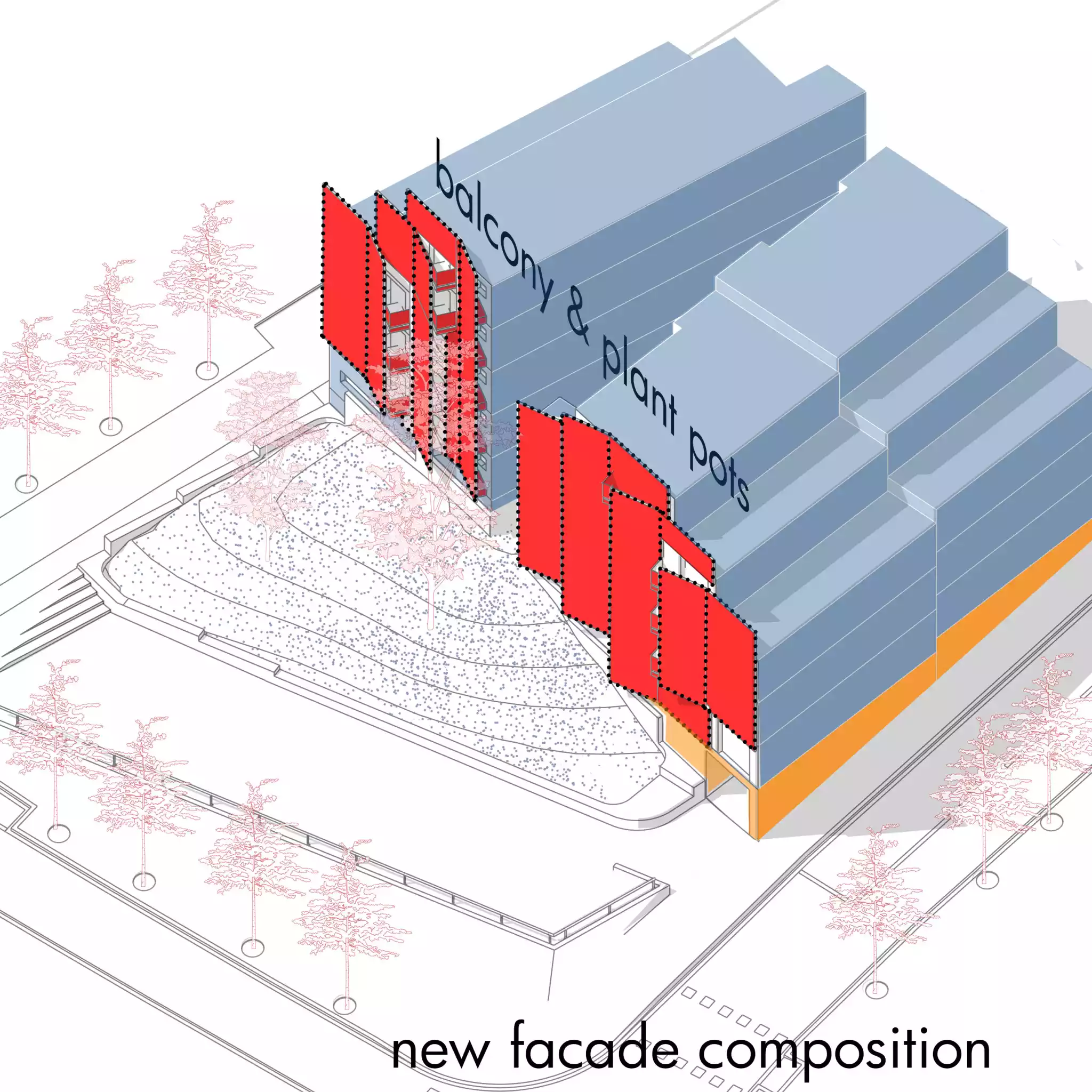
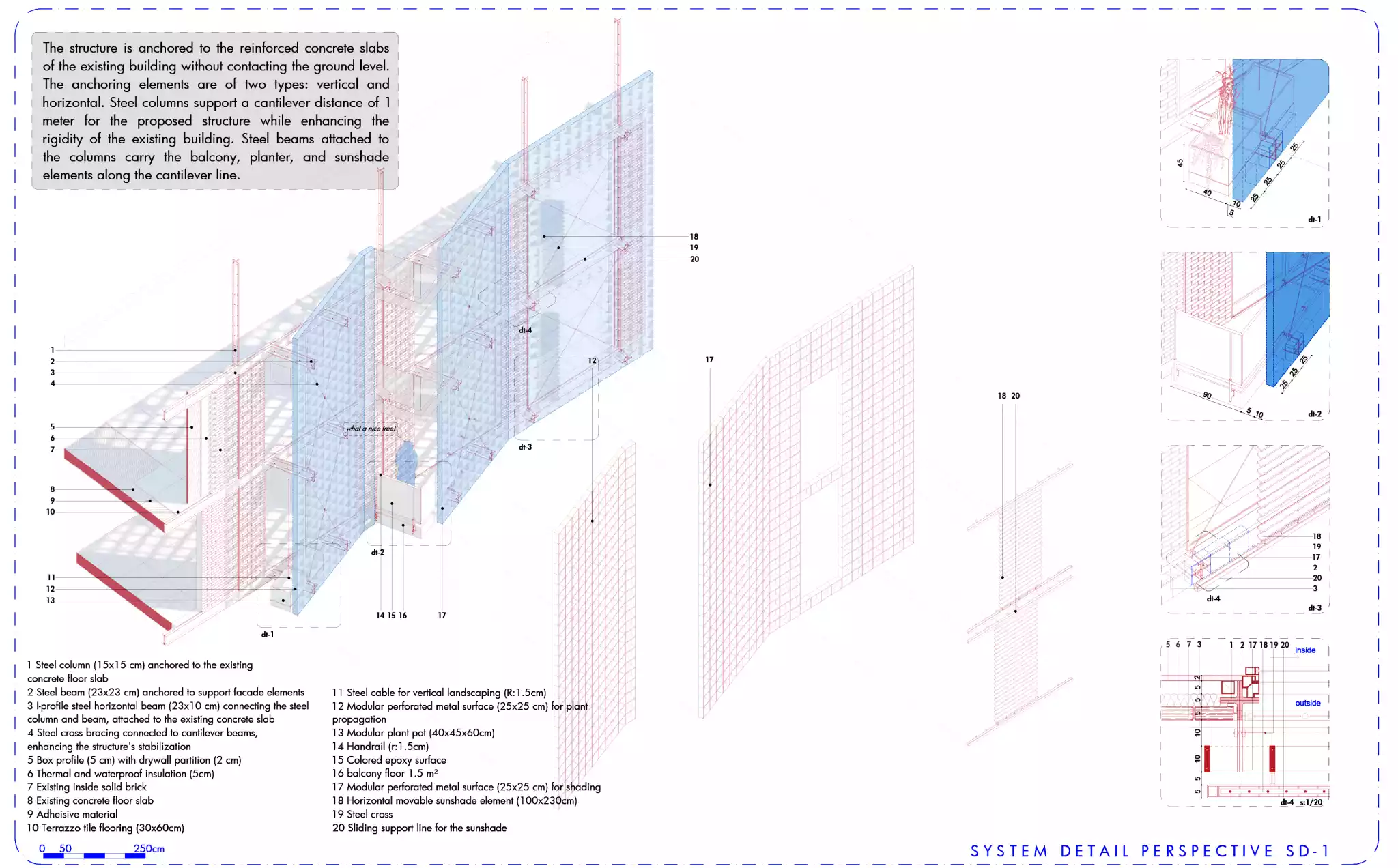
The structure is anchored to the existing concrete slabs without touching the ground level. Anchoring elements are of two types: vertical and horizontal. Steel columns support a 1-meter cantilever distance of the proposed structure while increasing the rigidity of the existing structure. Steel beams attached to the columns carry balcony, planter, and sunshade elements along the cantilever line.

Facade components are attached to the structure, varying according to the function of the interior space. The modular facade mesh provides a final touch to the urban perception. This structure offers a modular pattern to allow controlled sunlight into the interior while also creating climbing areas needed for vertical gardens. Furthermore, these elements create an ambiguous space between the city and the space while ensuring residential privacy, thus integrating the design into urban life with all its components.
 
 
Related Projects